DA PAM 670-1: 22-16. Combat and special skill badges and tabs
Quick Answer
Combat and special skill badges are organized in six groups: Group 1 (CIB, CMB, CAB), Group 2 (EIB, EFMB, ESB), Group 3 (aviator, flight surgeon, aviation, EOD, parachute rigger badges), Group 4 (parachutist, pathfinder, air assault, diver, space badges, Ranger/SF/Sapper tab replicas), Group 5 (driver/mechanic, marksmanship), Group 6 (physical fitness, APFU only). Up to six total badges may be worn on the ASU; four on the AGSU.
Important
Unit and command policies may be more restrictive than AR 670-1. Always verify with your chain of command for local policies.
Official Source
View DA PAM 670-1, Section 22-16 (Pages 310-334)Full Details
22-16. Combat and special skill badges and tabs
a. Order of group precedence. The order of group precedence for combat and special skill badges authorized for
wear on the Army uniform is as follows:
(1) Group 1. Combat infantryman badges (three awards) (see fig 22–34), combat medical badges (three awards)
(see fig 22–35); and combat action badge (see fig 22–36).
(2) Group 2. Expert infantryman badge (see fig 22–37); expert field medical badge (see fig 22–38); and expert
Soldier badge (see fig 22–39).
(3) Group 3. Army astronaut device (worn attached to any aviation badge or Army space badge) (see fig 22–40);
Army aviator badges (three degrees) (see fig 22–41); flight surgeon badges (three degrees) (see fig 22–42); aviation
badges (three degrees) (see fig 22–43); EOD badges (three degrees) (see fig 22–44); and parachute rigger badge (see
fig 22–45).
(4) Group 4. Glider badge (rescinded) (see fig 22–46); parachutist badges (three degrees) (see fig 22–47); para-
chutist badges with combat jump device (four degrees) (see fig 22–48); pathfinder badge (see fig 22–49); military
freefall parachutist badges (two degrees) (see fig 22–50); military freefall parachutist badges with combat jump de-
vice; air assault badge (see fig 22–51); diver badges (six badges) (see fig 22–52); space badges (three degrees) (see
fig 22–53); and Ranger, Special Forces, and Sapper tab metal replicas (see figs 22–54 through 22–56).
(5) Group 5. Driver and mechanic badge (see fig 22–57) and marksmanship badges (see figs 22–18 through
22–23).
(6) Group 6. Physical fitness badge. The physical fitness badge is authorized for wear only on the APFU (see fig
22–58).
b. Wear of nonsubdued combat and special skill badges and special skill tab metal replicas.
(1) Army service uniform. Nonsubdued combat and special skill badges are worn on the ASU coat, service uniform
shirt, and on the Army maternity tunic (female Soldiers only). A total of six badges are authorized for wear at one
time (see figs 22–59 and 22–60). This total does not include special skill tab metal replicas, but does include any
marksmanship badges worn (see paras 22–7 and 22–16c for guidance when wearing full-sized and miniature medals).
(2) Army green service uniform. Nonsubdued combat and special skill badges are worn on the AGSU coat and on
the AGSU–M tunic. A total of four badges are authorized for wear at one time (see fig 22–61), to include any marks-
manship badges worn (see para 22–7 for guidance when wearing full-sized medals). Special skill tab metal replicas
are not authorized for wear on the AGSU. On the AGSU, all Soldiers will follow the wear guidance of the male
Soldiers in paragraphs 22–16b(3)(a) through 22–16b(3)(f) (see fig 22–61).
(3) How worn.
(a) Personnel may only wear one combat or special skill badges from either group 1 or group 2 above the ribbons,
above the top of the pocket, or in a similar location for uniforms without pockets. Soldiers may wear up to three badges
from groups 3, 4, and 5 above the ribbons, above the top of the pocket, or in a similar location for uniforms without
pockets. One badge from either group 1 or group 2 may be worn with badges from groups 3, 4, and 5, provided that
the total number of badges worn above the ribbons, above the top of the pocket, or in a similar location for uniforms
without pockets does not exceed three. The driver and mechanic badge is not authorized for wear above the ribbons,
above the top of the pocket, or in a similar location for uniforms without pockets.
(b) Only three badges from groups 3, 4, or 5, to include marksmanship badges, can be worn below the ribbons on
the pocket flap, or in a similar location for uniforms without pockets, at one time (see para 22–15d(3) for wear of
badges below the ribbons on the pocket flap or in a similar location for uniforms without pockets). Badges from groups
1 and 2 are not authorized for wear below the ribbons on the pocket flap or in a similar location for uniforms without
pockets. Personnel will wear the driver and mechanic badge only on the wearer’s left pocket flap or in a similar
location on uniforms without pockets. Personnel may not attach more than three clasps to the driver and mechanic
badge.
(c) The order of precedence for combat and special skill badges are established only by group. There is no prece-
dence for combat or special skill badges within the same group. For example, personnel who are authorized to wear
the parachutist and air assault badges may determine the order of wear between those two badges.
(d) Personnel wear badges 1/4 inch above the ribbons or above the top of the pocket or in a similar location for
uniforms without pockets. Badges are worn one above the other in order of group precedence from top to bottom with
1/2 inch between badges. Badges are worn below the ribbons on the pocket flap or in a similar location for uniforms
without pockets, as described in paragraphs 22–15c and 22–15d. When worn together, the badges with airborne back-
ground trimming are considered a single item for placement and measurement is from the edge of the trimming (or
top of the star and wreath for senior and master parachutist badges, which project slightly above the trimming). In
those instances where the service/dress coat lapel obscures the badges, personnel may wear the badges (or airborne
background trimming, if worn beneath the badge) aligned with the left edge of the ribbons or medals (see figs 22–30
through 22–32).
(e) Personnel may wear up to three badges above the ribbons or pocket flap or in a similar location for uniforms
without pockets (see figs 22–30 through 22–32 and 22–60 through 22–62).
(f) Wear of commercial, mirror-like finish combat and special skill badges is authorized on service and dress uni-
forms. However, Soldiers may not mix these badges with combat and special skill badges that do not have the mirror-
like finish.
(g) Special skill tab metal replicas may be worn with other special skill badges or marksmanship badges or tab on
the pocket flap. Male Soldiers will wear the special skill tab metal replicas and President’s Hundred tab 1/8 inch below
the top of the pocket equally spaced with other badges and tabs and between the left and right side of the pocket flap.
Female Soldiers wear special skill tab metal replicas and President’s Hundred tab with the upper portion of the tab 1/4
inch below the ribbon bar equally spaced under the ribbon bar or in a similar location if ribbons are not worn. Soldiers
may wear special skill badges or marksmanship badges 1/4 inch below lowest portion of the metal tab replicas only if
the Soldier has more than three combined special skill tab metal replicas, special skill badges, or marksmanship badges
or tabs worn on the pocket flap, or in a similar location for uniforms without pockets. Any special skill badges worn
under metal tab replicas on the pocket flap will be worn in order of precedence by group from the wearer’s right to
left. Special skill tab metal replicas may not be worn one on top of another (stacked) and special skill tab metal replicas
may not be worn above the ribbons (see para 22–16e for further wear guidance of special skill tabs and fig 22–63 for
wear of special skill tab metal replicas with other badges on the pocket flap).
uniform
c. Wear of nonsubdued dress miniature badges and miniature metal tab replicas.
(1) Dress miniature combat and special skill badges and miniature metal tab replicas are worn on all mess and
evening mess uniforms. Personnel may wear up to five combat and special skill badges or miniature metal tab replicas
(or a combination). However, personnel may only wear one combat or special skill badge from either group 1 or group
2. When one badge or tab is worn, it is centered immediately above the miniature medals. When two badges or tabs
are worn, they are placed side by side and centered immediately above the miniature medals. When three badges or
tabs are worn, two are placed side by side and centered immediately above the medals and the third is centered 1/4
inch above the lower two badges or tabs. When four badges or tabs are worn, they are placed in stacks of two with the
third and fourth badges or tabs centered side by side 1/4 inch above the lower two badges or tabs. When five badges
or tabs are worn, the fifth will be worn centered 1/4 inch above the third and fourth badges or tabs. Badges and tabs
are worn in order of group precedence from top to bottom and the wearer’s right to left. Badges will not extend beyond
the lapel (see fig 22–64).
(2) Personnel may wear dress miniature combat and special skill badges and miniature metal tab replicas on the
service uniform shirt of the Class B uniform in the same manner as full-sized combat and special skill badges.
However, they may not mix dress miniature combat and special skill badges with full-sized or miniature combat and
special skill badges. The combat infantryman badge and expert infantryman badge are the only badges available in
three sizes (full-sized, miniature, and dress miniature). The miniature size of these two badges may be worn on the
service uniform shirt or coat when space does not allow to wear the full-sized badge properly or if it is obstructed
from view (by the collar).
(3) Miniature badges and miniature metal tab replicas are not authorized for wear on the AGSU.
d. Wear of subdued full-sized combat and special skill badges on combat uniforms.
(1) Subdued combat and special skill badges are worn on the combat uniform above the U.S. Army tape in order
of group precedence from top to bottom and from the wearer’s right to left. Badges may all be either sew-on or pin-
on. Soldiers may only wear badges in a deployed or field environment if sewn on. Background material of sew-on
badges is not included as part of the measurement for placement of badges.
(2) Personnel may wear up to five badges above the U.S. Army tape, provided that space allows for the badges on
the individual’s uniform. Personnel may only wear one combat or special skill badge from either group 1 or group 2.
Soldiers may wear up to five badges from groups 3, 4, and 5. One badge from either group 1 or group 2 may be worn
with badges from groups 3, 4, and 5, provided that the total number of badges on the combat uniform does not exceed
five. The driver and mechanic badges are not authorized for wear on utility uniforms. One or more badges are worn
as follows:
(a) When one badge is worn, it is centered 1/8 inch above the U.S. Army tape.
(b) When two badges are worn, they are centered 1/8 inch above the U.S. Army tape in a single vertical column
with 1/4 inch between badges.
(c) When three badges are worn, they are centered 1/8 inch above the U.S. Army tape either in a single vertical
column with 1/4 inch between badges; or two badges are worn side by side, 1/8 inch above and centered on the U.S.
Army tape with 1/2 inch between badges horizontally, and the third badge is centered on the U.S. Army tape 1/4 inch
above the lower two badges (see fig 22–65).
(d) When four badges are worn, they are centered 1/8 inch above the U.S. Army tape and worn either vertically
and side by side in stacks of two with 1/4 inch between badges vertically and 1/2 inch between badges horizontally;
or two badges are worn side by side, 1/8 inch above and centered on the U.S. Army tape with 1/2 inch between badges
horizontally, and the remaining two badges are centered on the U.S. Army tape and stacked vertically 1/4 inch above
the lower two badges with 1/4 inch between badges. Badges stacked one on top of another are centered on each other
with the smaller badge centered above or below (according to precedence) the larger badge. Vertical spacing is meas-
ured between the larger badges (see fig 22–66).
(e) When five badges are worn, they are worn the same as four badges with the additional badge centered 1/4 inch
above the top two badges (see fig 22–67).
e. Special skill tabs.
(1) Ranger tab.
(a) Full-sized, embroidered, full-color and subdued. The full-color tab is 2–3/8 inches long and 11/16 inch wide
with a 1/8-inch yellow border and the word “Ranger” inscribed in yellow letters, 5/16 inch high. The subdued tab is
identical, except the background is bagby green for OCP and the word “Ranger” is in black letters (see fig 22–54).
(b) Metal replicas, full dress and miniature. The Ranger tab metal replica is available in two sizes: full and dress
miniature. The full-sized version is approximately 1–5/32 inches wide. The dress miniature version is 13/16 inch wide.
(c) Authorized wearers. See AR 600–8–22 for authorization to wear the Ranger tab.
(2) Special Forces tab.
(a) Full-sized, embroidered, full-color and subdued. The full-color Special Forces tab is a teal blue arc, 3 –1/4
inches wide and 11/16 inch high, with the designation “Special Forces” in yellow letters, 5/16 inch high. The subdued
tab is identical in shape to the full-color tab, except the background is bagby green for OCP and the words “Special
Forces” are in black letters (see fig 22–55).
(b) Metal replicas, full dress and miniature. The Special Forces tab metal replica is available in two sizes: full and
dress miniature. The full-sized version is approximately 1 –9/16 inches wide. The dress miniature version is 1 inch
wide.
(c) Authorized wearers. See AR 600–8–22 for authorization to wear the Special Forces tab.
(3) Sapper tab.
(a) Full size, embroidered, full-color and subdued. The full-color Sapper tab is a red arc 2 –3/8 inches long and
11/16 inch wide with a 1/8-inch red border and the word “Sapper” inscribed in white letters 5/16 inch high. The
subdued tab is identical in shape to the full-color tab, except the background is bagby green for OCP and the word
“Sapper” is in black letters (see fig 22–56).
(b) Metal replicas, full dress and miniature. The Sapper tab metal replica is available in two sizes: full and dress
miniature. The full-sized version is approximately 1 –5/32 inches wide. The dress miniature version is 13/16 inches
wide.
(c) Authorized wearers. See AR 600–8–22 for authorization to wear the Sapper tab.
(4) Order of group precedence. For purposes of classification and wear policy, the Sapper, Ranger, and Special
Forces tab metal replicas are classified as group 4 special skill badges.
f. Wear of special skill tabs.
(1) Full-sized, subdued, embroidered. A maximum of three tabs may be worn on the combat uniform or similar
utility uniform. Special skill tabs will be centered both vertically and horizontally 1/4 inch above the SSI on the left
sleeve of the combat uniform and ECWCS with 1/8 inch between tabs (see fig 22–68). On jackets without pocket
flaps, special skill tabs are worn centered. The President’s Hundred tab is a marksmanship tab and is worn 1/8 inch
below the lowest special skill tab. The maximum of three tabs authorized on the combat uniform does not include tabs
that are a part of the organization SSI (such as airborne or mountain tabs).
(2) Full-sized, nonsubdued, embroidered. Two tabs of the Soldier’s choosing may be sewn on the AGSU coat.
The special skill tab will be centered both vertically and horizontally 1/4 inch above the SSI on the left sleeve of the
AGSU coat (see fig 22–69). Soldiers are authorized two tabs in addition to a tab that is part of the organization SSI
(such as airborne or mountain tabs).
(3) Metal tab replicas, full-sized. On the ASU and on the service uniform shirt, personnel wear the full-sized metal
tab replicas as described in paragraph 22–16b. As an option, Soldiers may wear either the full-sized or the dress
miniature metal tab replicas on the ASU shirt. If Soldiers wear the dress miniature versions of the tabs, they cannot
mix them with other sizes of combat and special skill badges on the shirts. Not authorized on the AGSU.
(4) Metal tab replicas, miniature. Miniature metal tab replicas are worn on the mess and evening mess uniforms
as described in paragraph 22–16c.
g. Physical fitness badge. The physical fitness badge is authorized only as a cloth badge and is worn only on the
APFU. The badge is worn centered on the upper left front side of the t-shirt. On the APFU running jacket, the insignia
is sewn centered 1/2 inch above the Army logo.
Related Figures
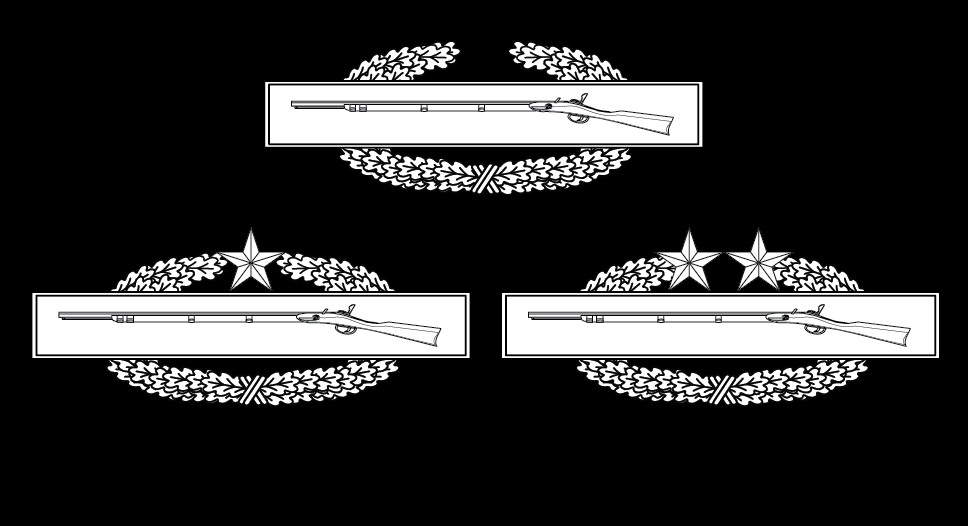
Figure 22-34: Combat infantryman badges
DA PAM 670-1, Page 311
Figure 22-34 from DA PAM 670-1
View in PDF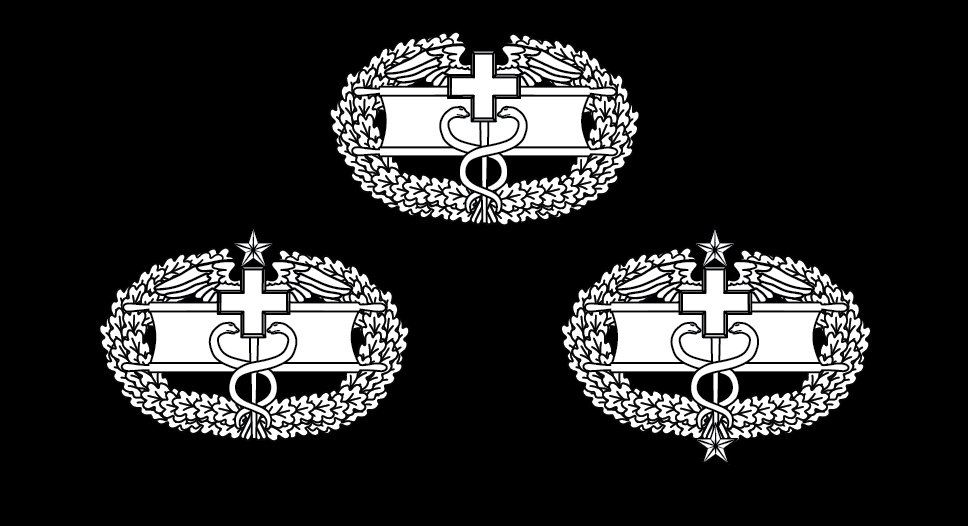
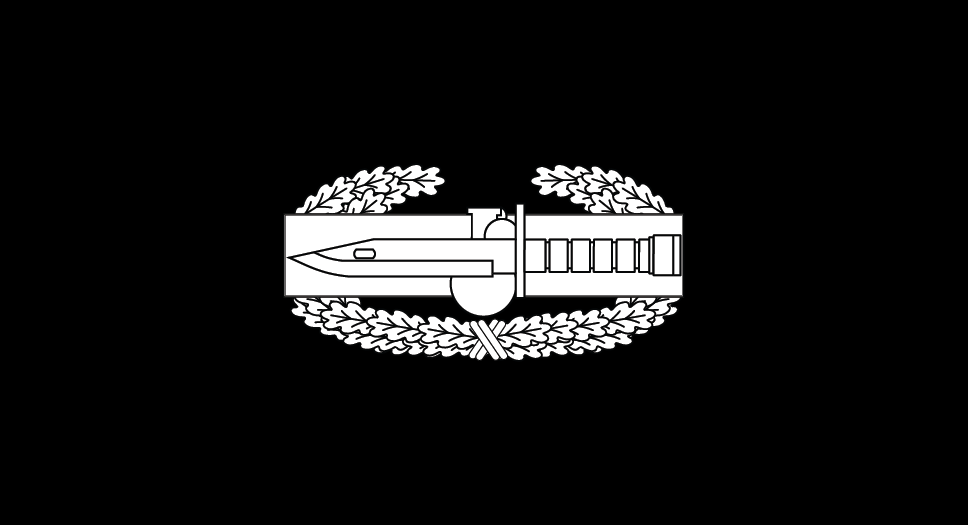

Figure 22-37: Expert infantryman badge
DA PAM 670-1, Page 313
Figure 22-37 from DA PAM 670-1
View in PDF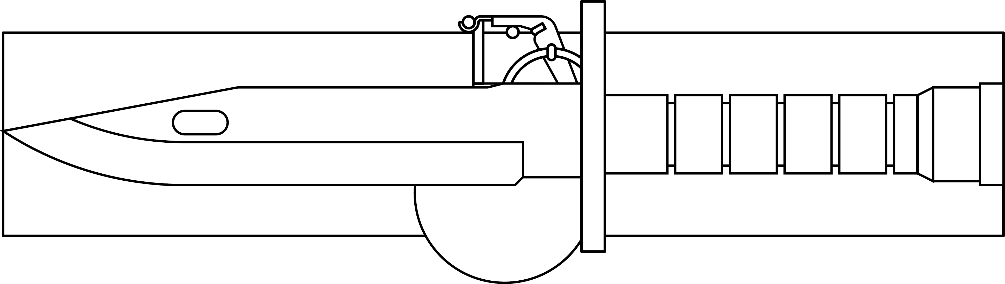
Figure 22-38: Expert field medical badge
DA PAM 670-1, Page 313
Figure 22-38 from DA PAM 670-1
View in PDF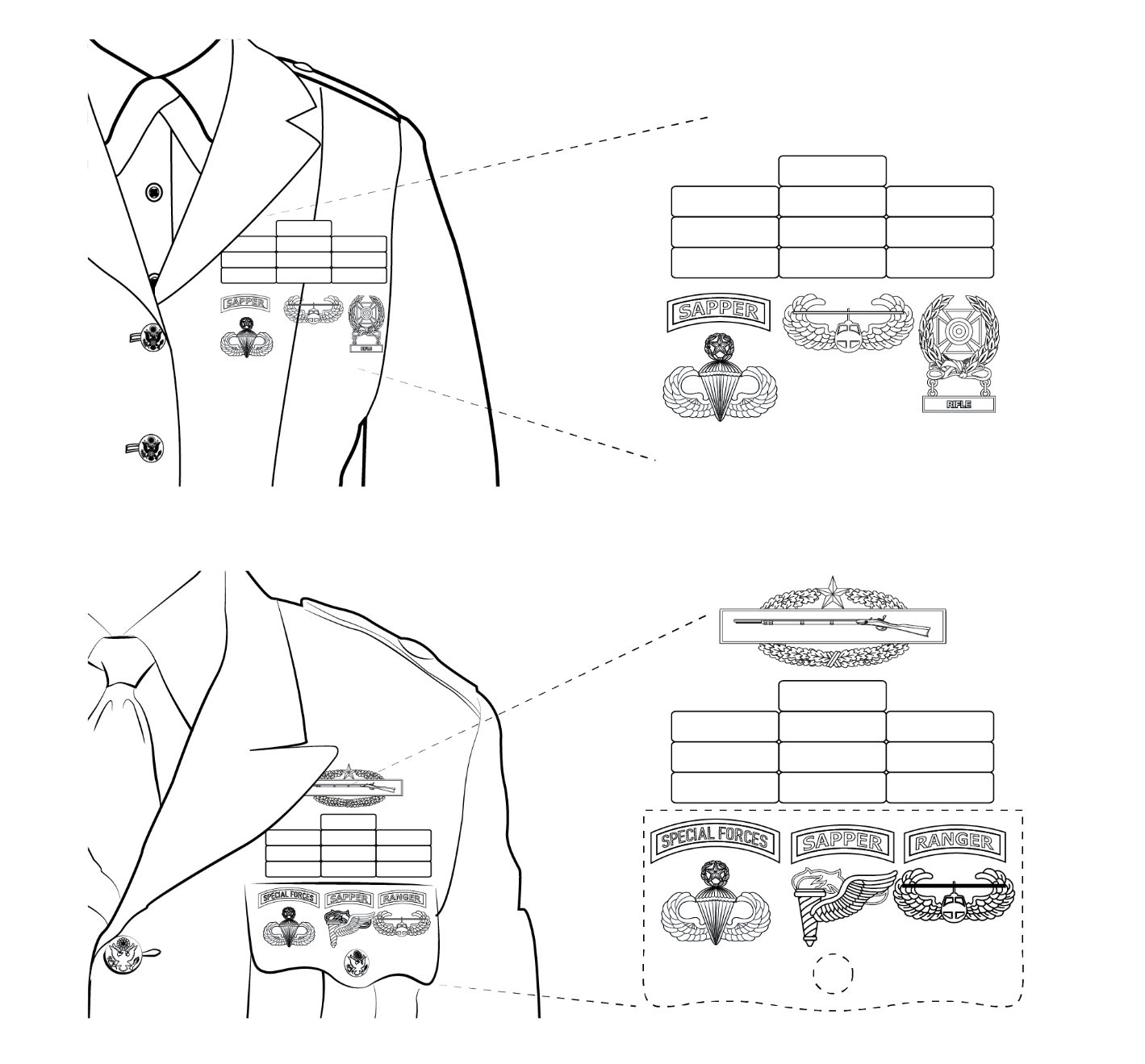
Figure 22-61: Wearing special skill badges above ribbons on the male Army service uniform and Army green service uniform
DA PAM 670-1, Page 328
Figure 22-61 from DA PAM 670-1
View in PDF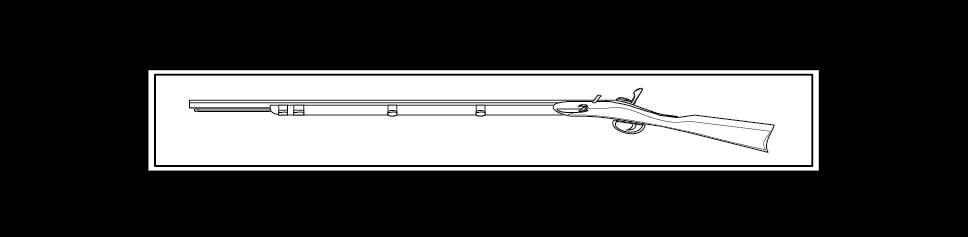
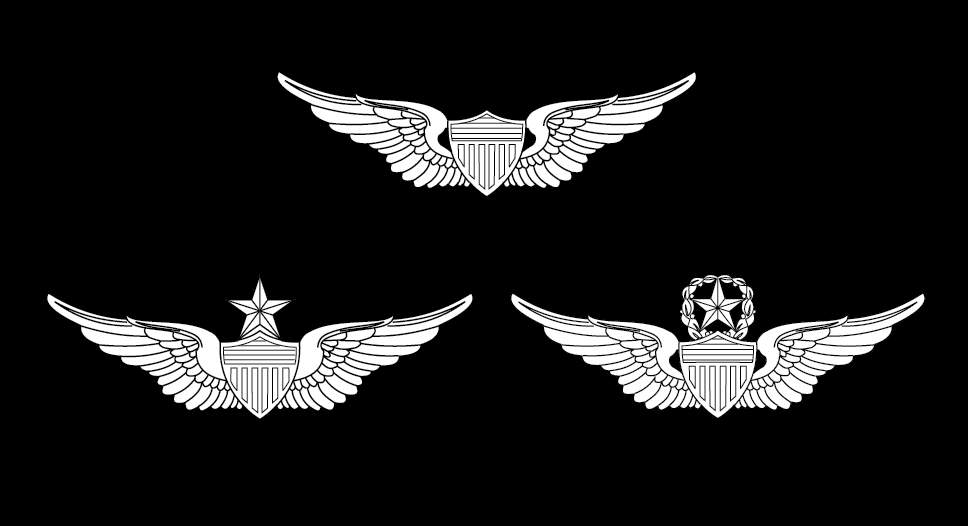
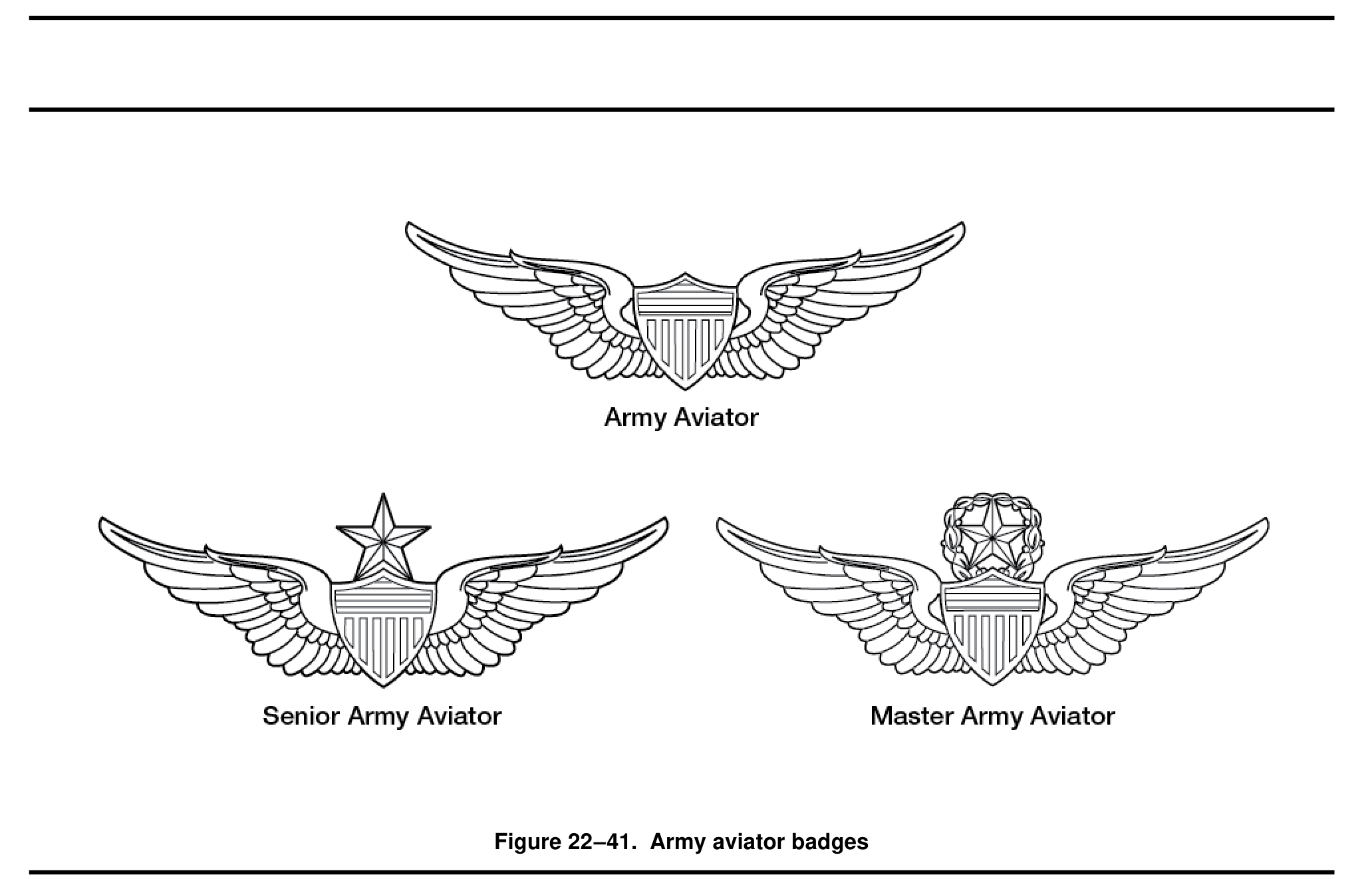
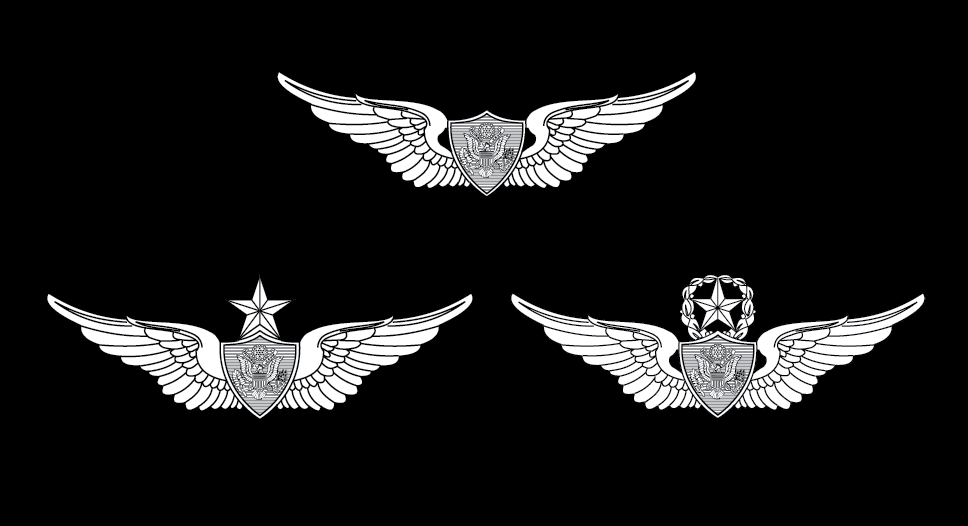
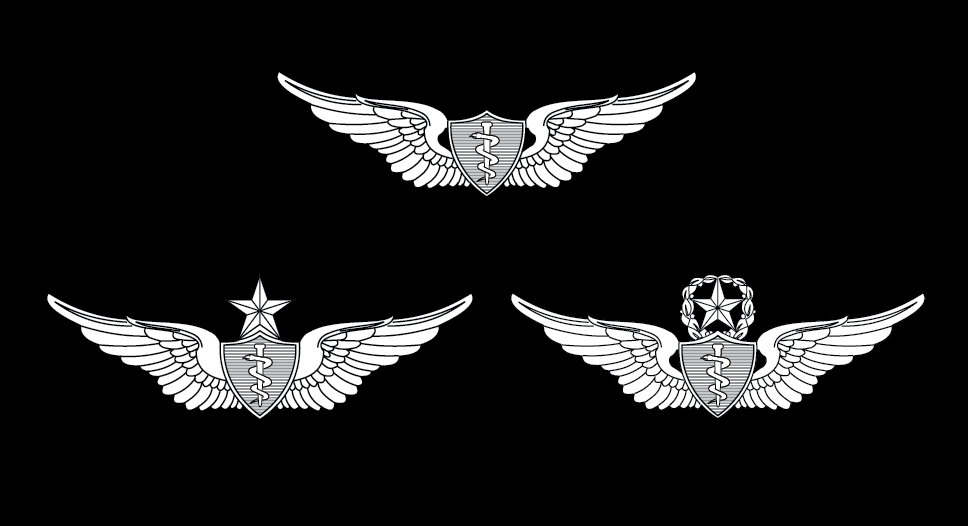
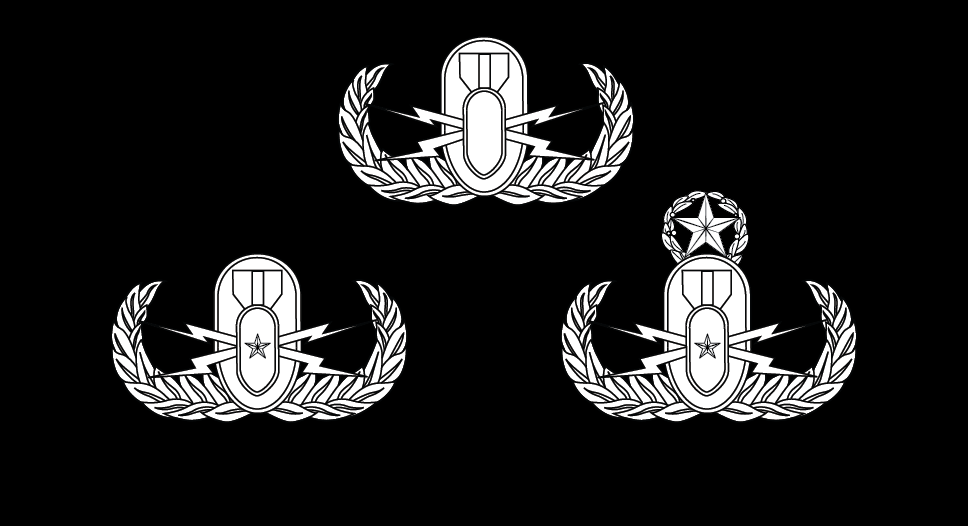
Figure 22-44: Explosive ordnance disposal badges
DA PAM 670-1, Page 316
Figure 22-44 from DA PAM 670-1
View in PDF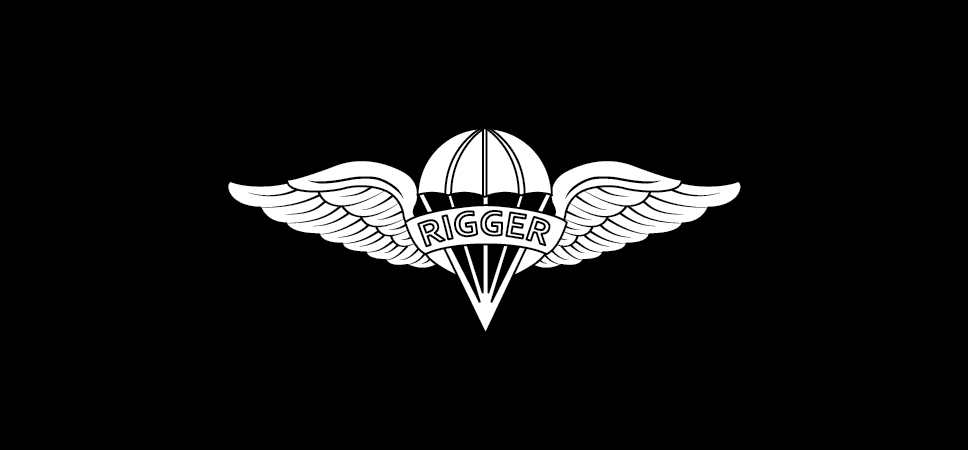
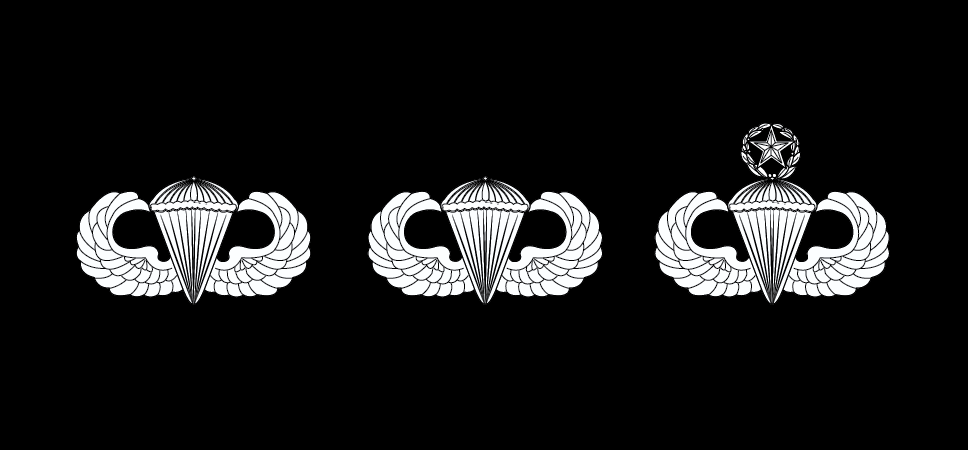
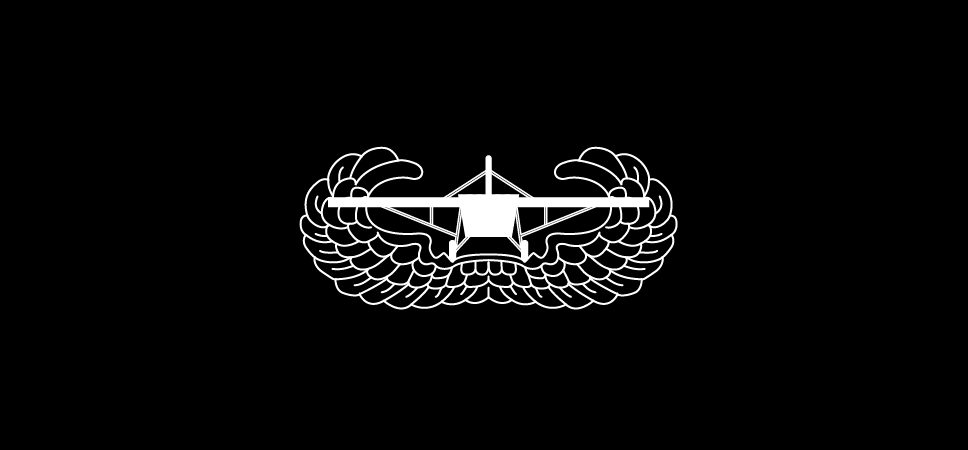
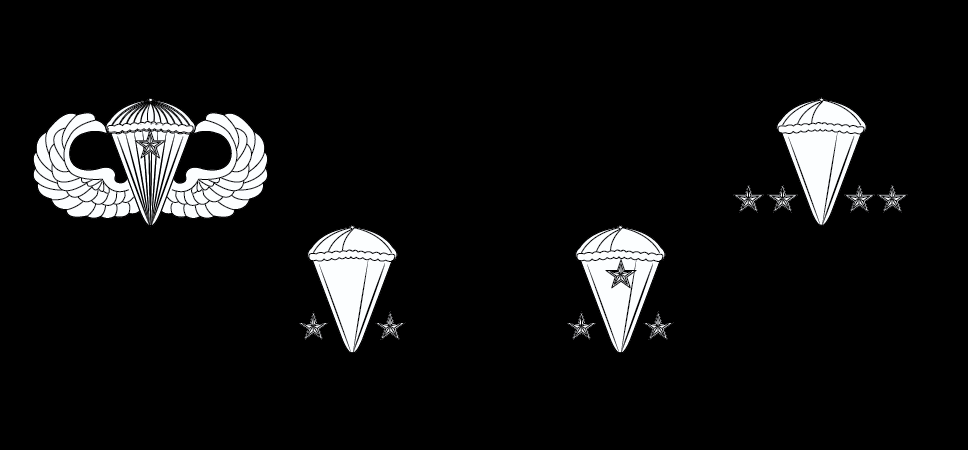
Figure 22-48: Parachutist badges with combat jump device
DA PAM 670-1, Page 318
Figure 22-48 from DA PAM 670-1
View in PDF
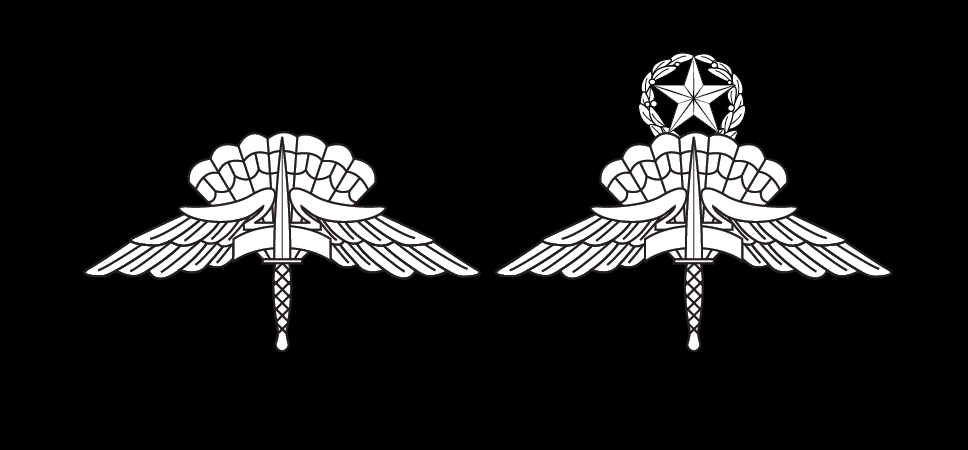
Figure 22-50: Military freefall parachutist badges
DA PAM 670-1, Page 319
Figure 22-50 from DA PAM 670-1
View in PDF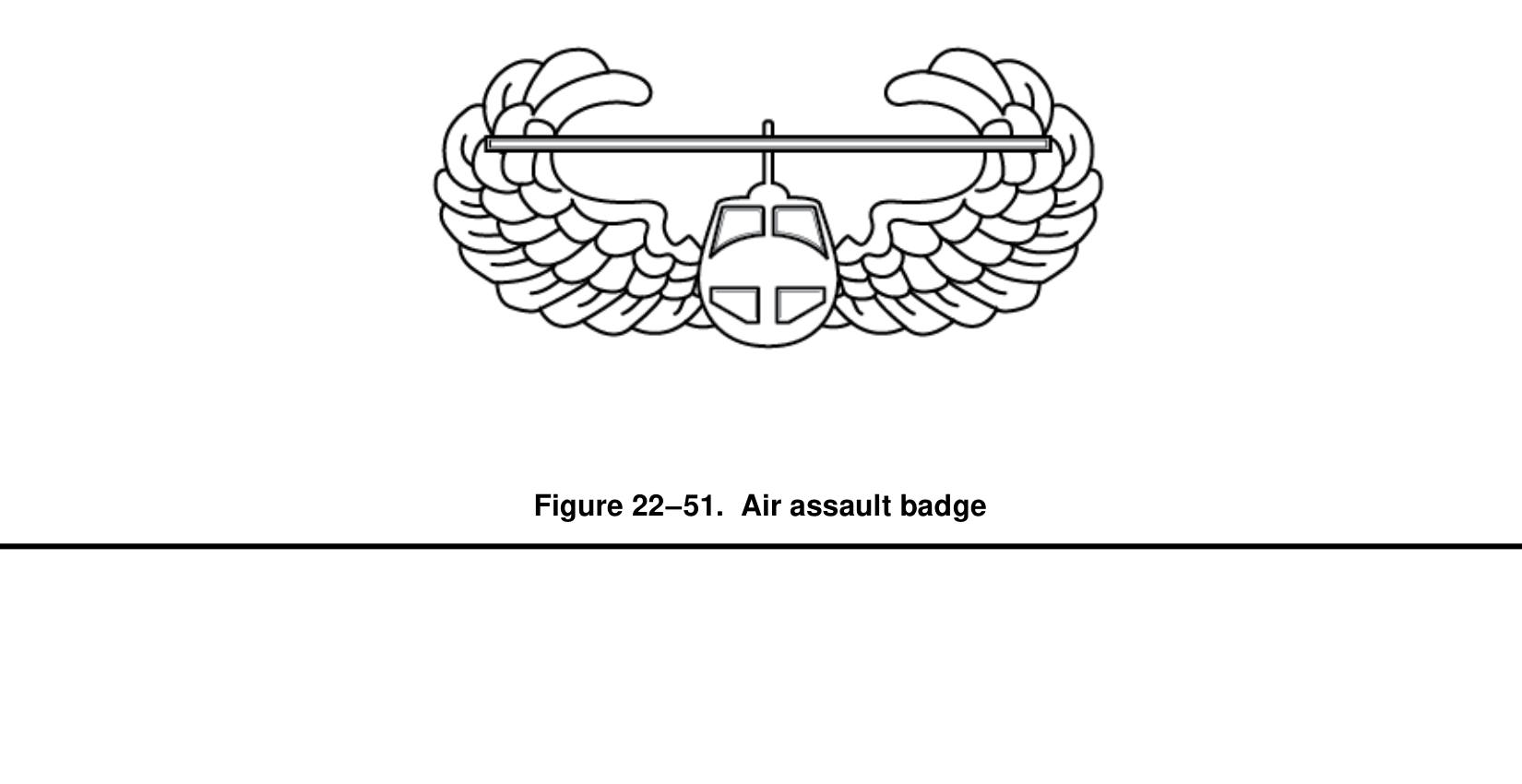
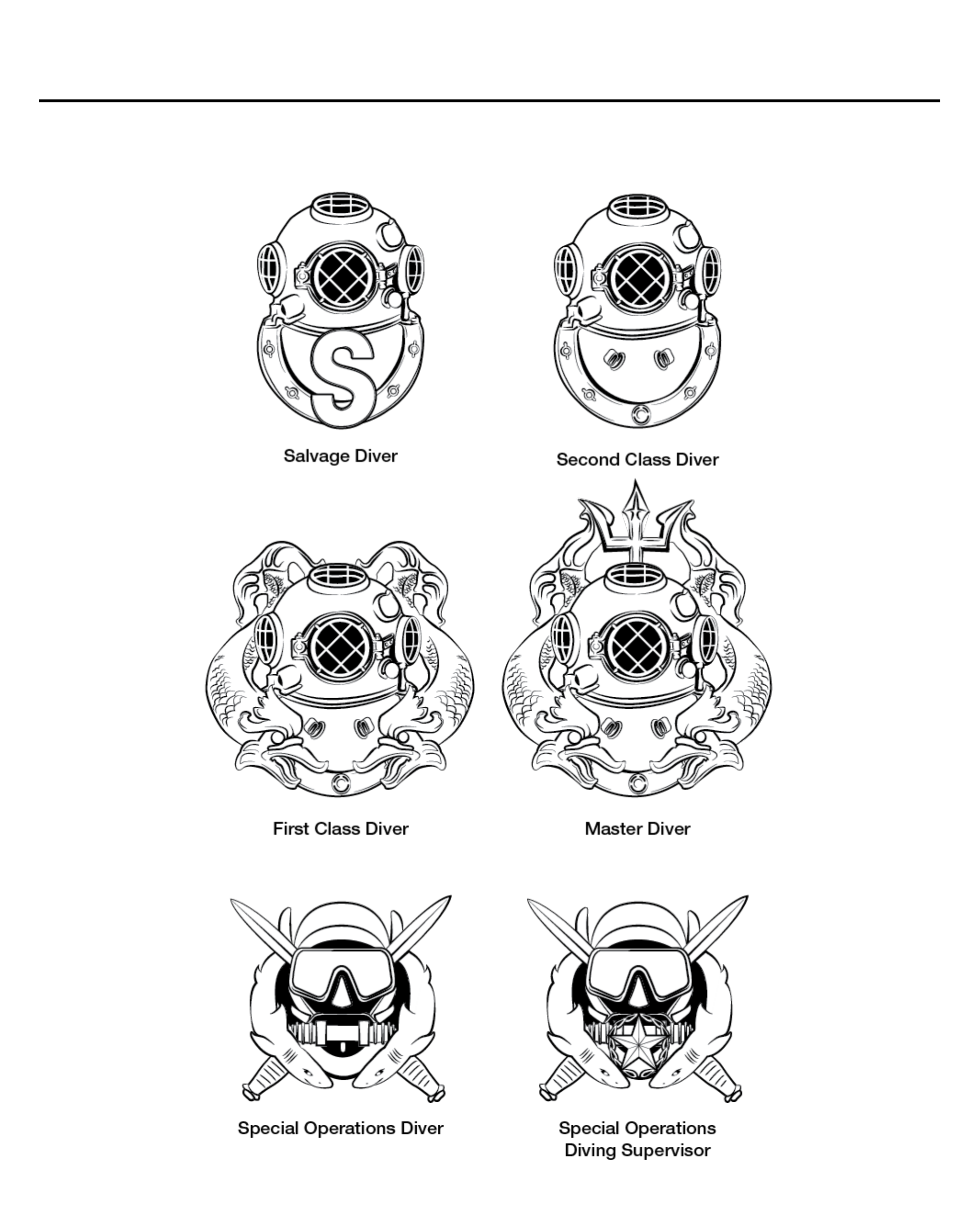
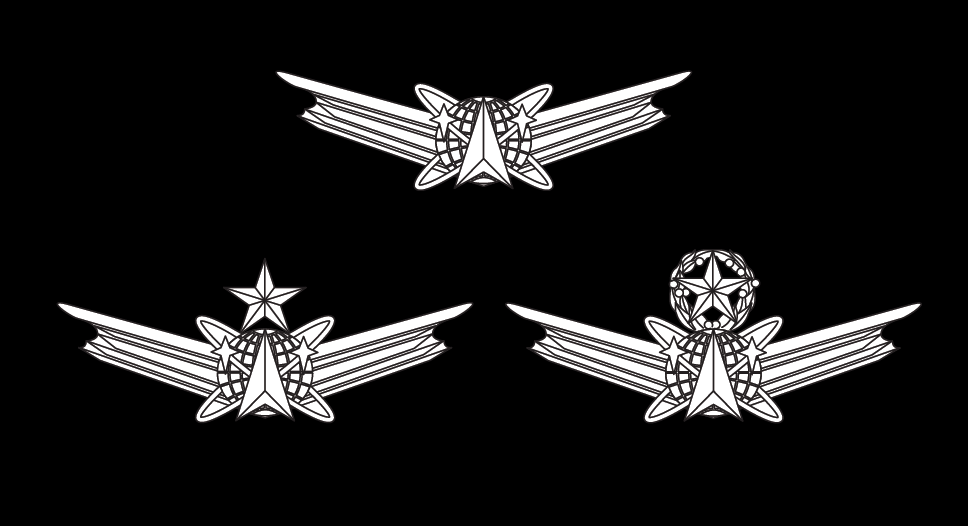
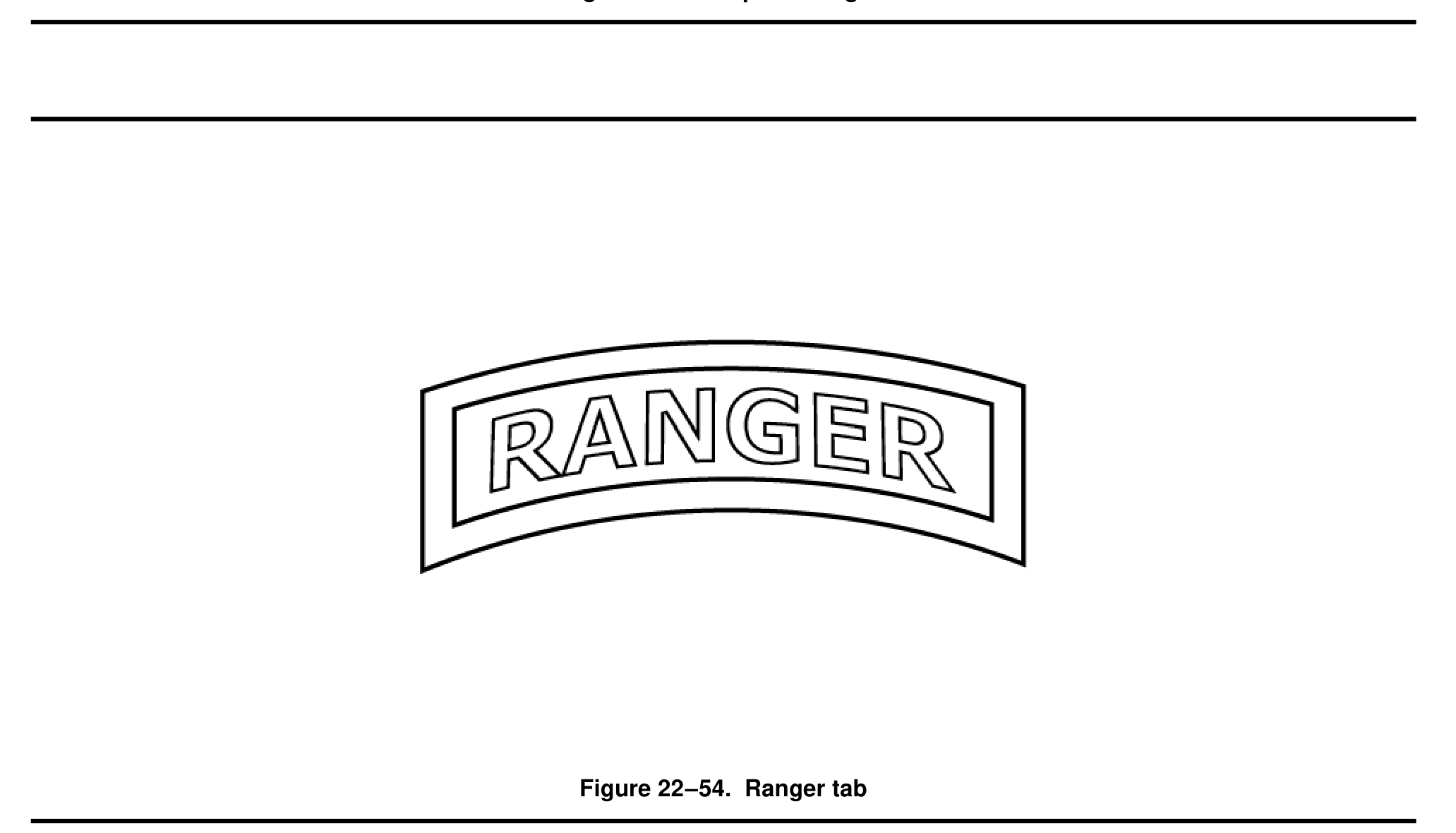
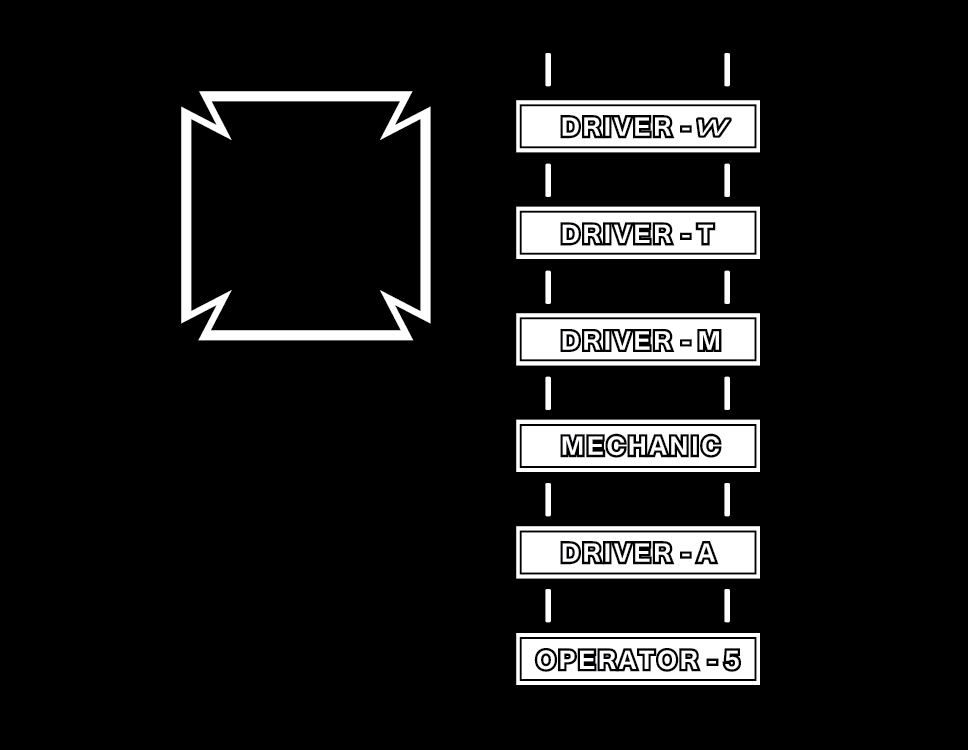
Figure 22-57: Driver and mechanic badges and clasps
DA PAM 670-1, Page 323
Figure 22-57 from DA PAM 670-1
View in PDF
Figure 22-18: U.S. distinguished international shooter badge
DA PAM 670-1, Page 296
Figure 22-18 from DA PAM 670-1
View in PDF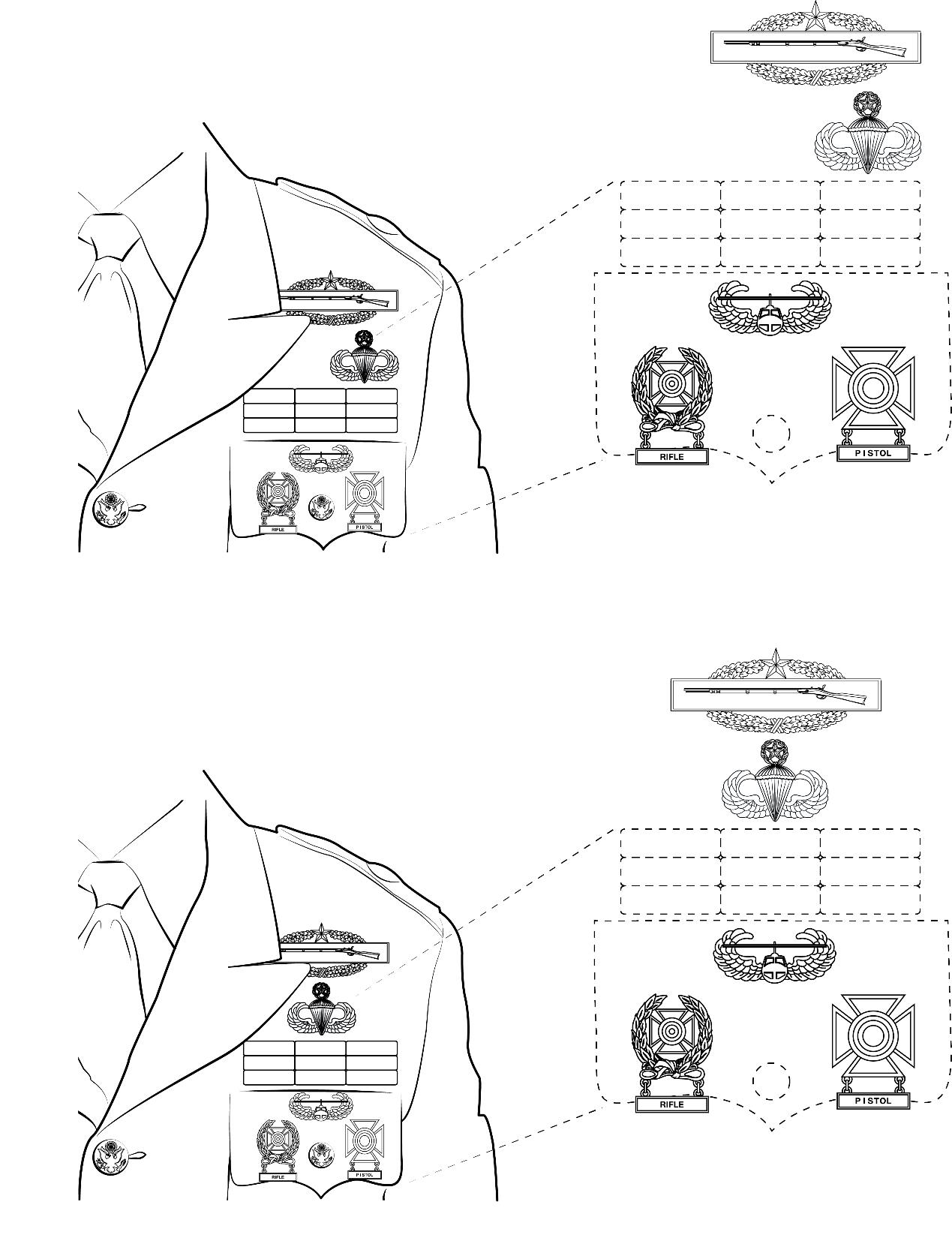
Figure 22-59: Wearing five badges on the Army service uniform, male, variations
DA PAM 670-1, Page 326
Figure 22-59 from DA PAM 670-1
View in PDF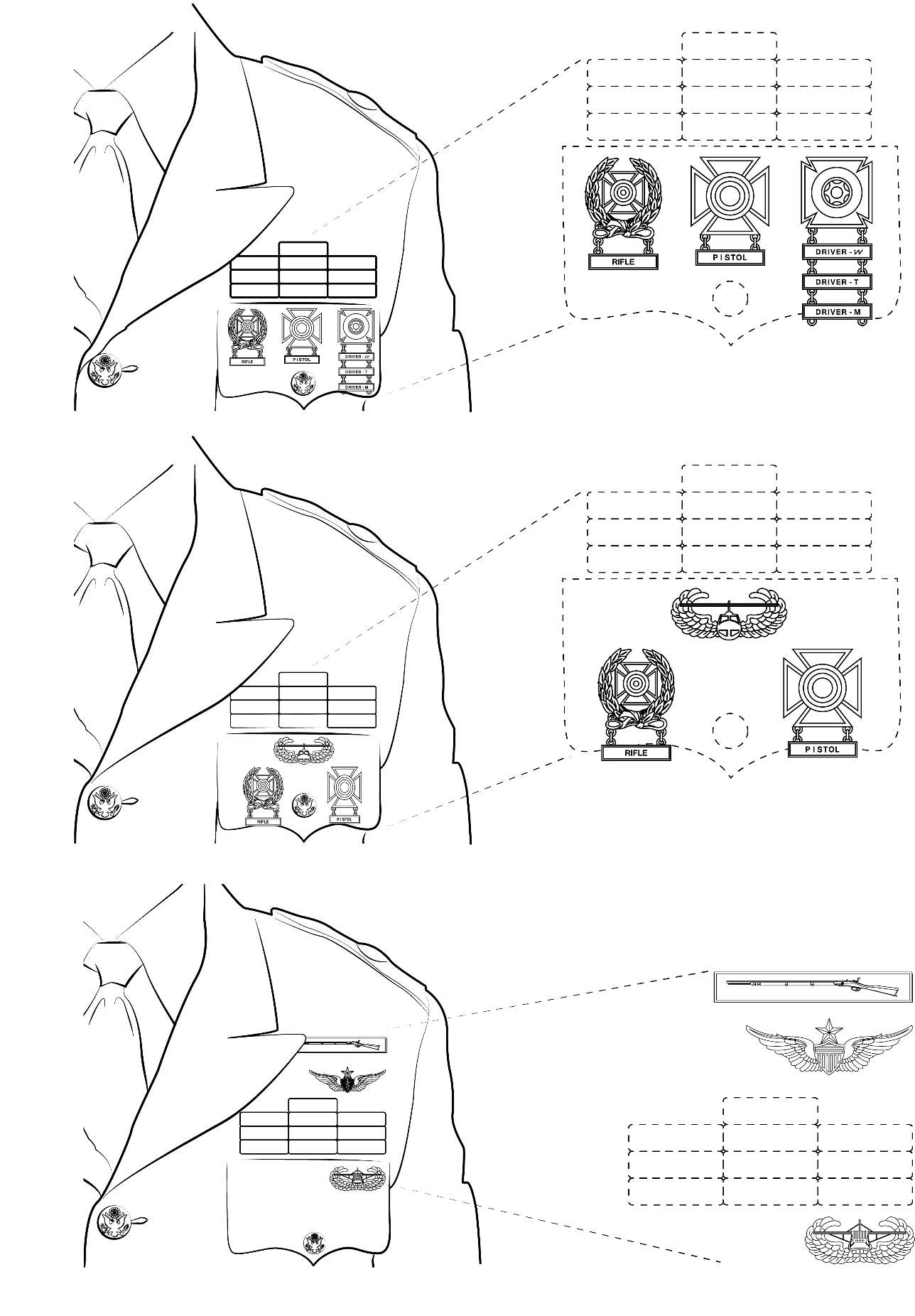
Figure 22-30: Wearing three badges on the Army service uniform, male, variations
DA PAM 670-1, Page 307
Figure 22-30 from DA PAM 670-1
View in PDF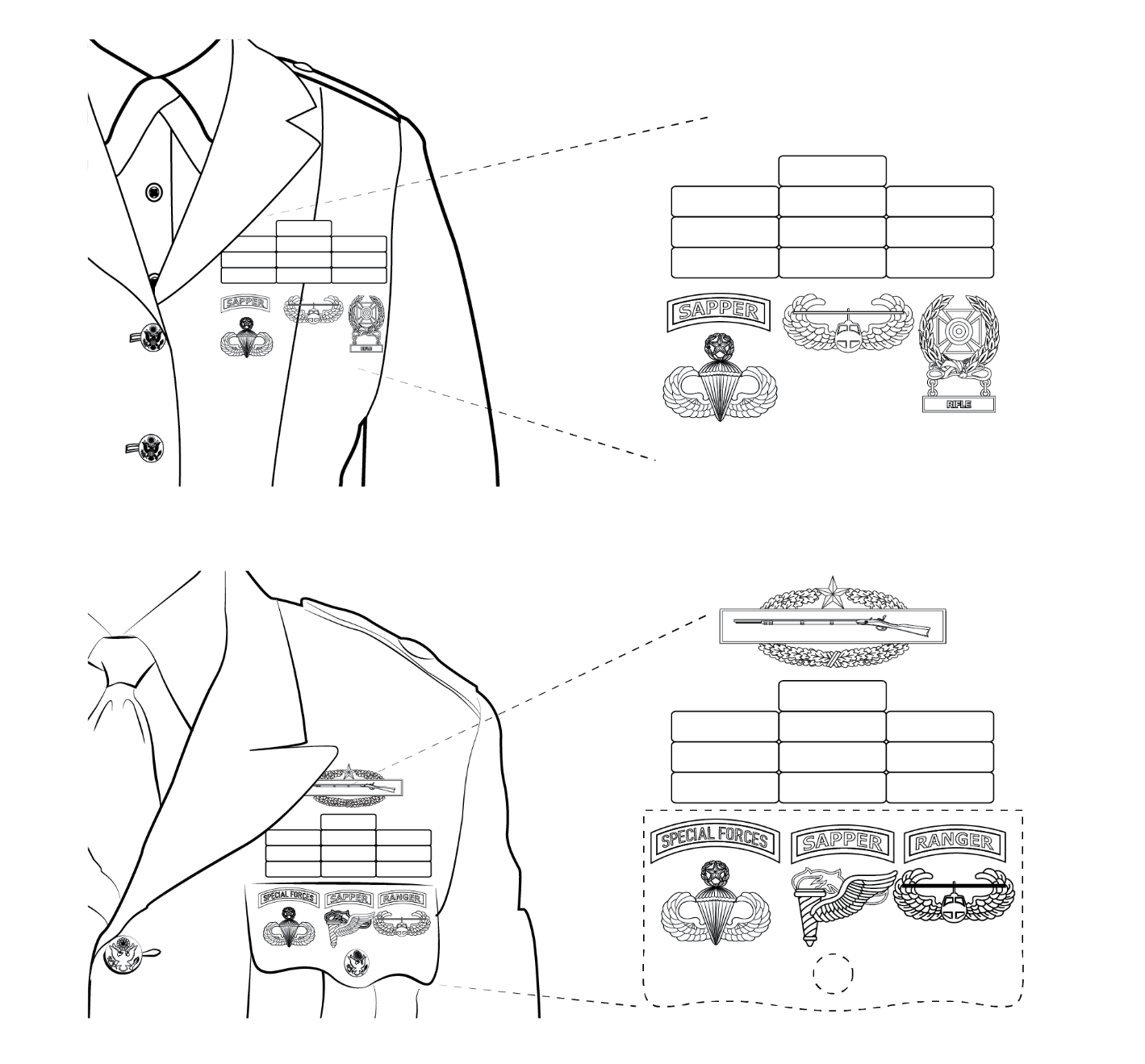
Figure 22-63: Wearing special skill tab metal replicas with other badges
DA PAM 670-1, Page 329
Figure 22-63 from DA PAM 670-1
View in PDF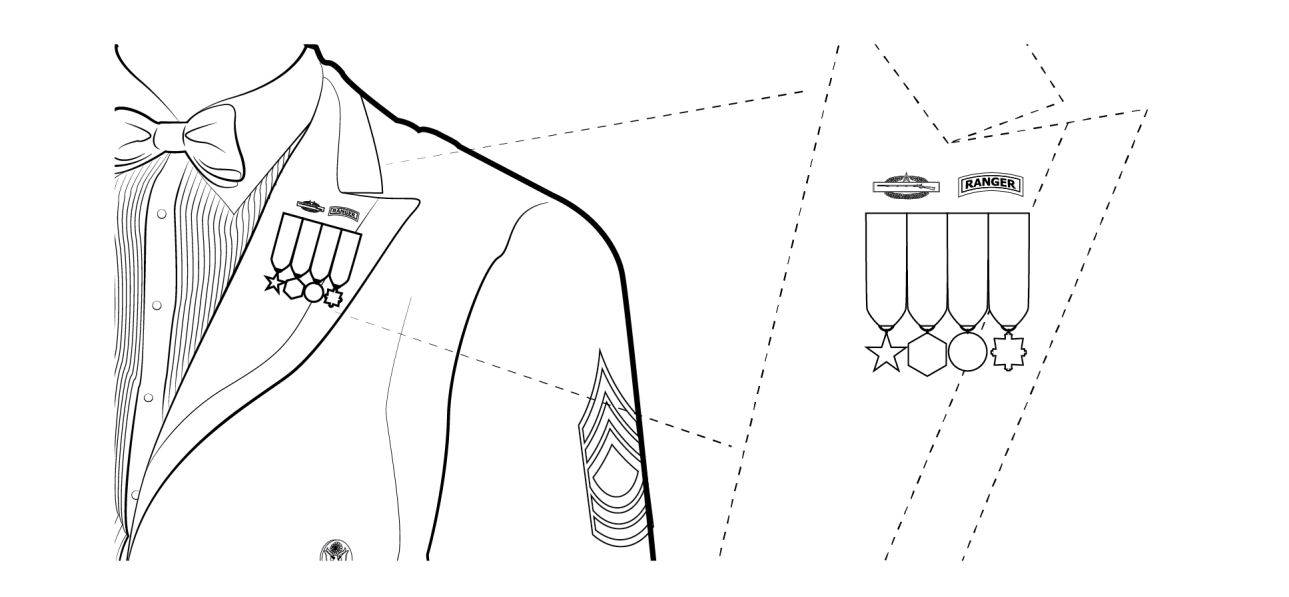
Figure 22-64: Wearing metal tab replicas on Army mess uniforms
DA PAM 670-1, Page 330
Figure 22-64 from DA PAM 670-1
View in PDF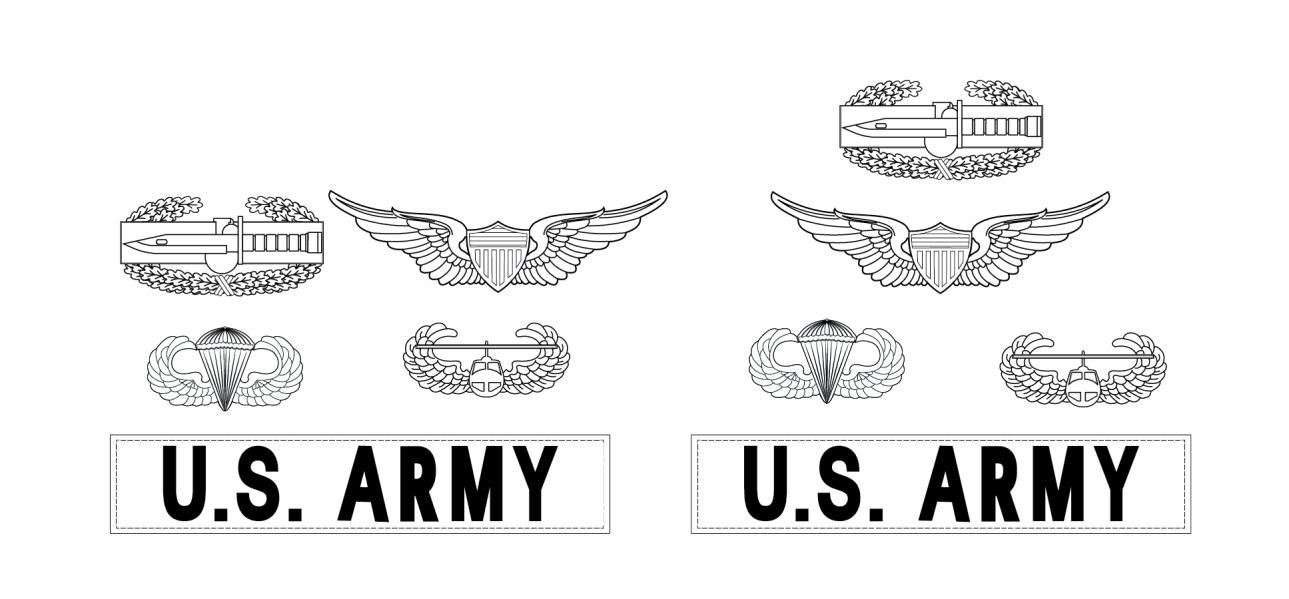
Figure 22-65: Wearing three subdued combat and special skill badges
DA PAM 670-1, Page 331
Figure 22-65 from DA PAM 670-1
View in PDF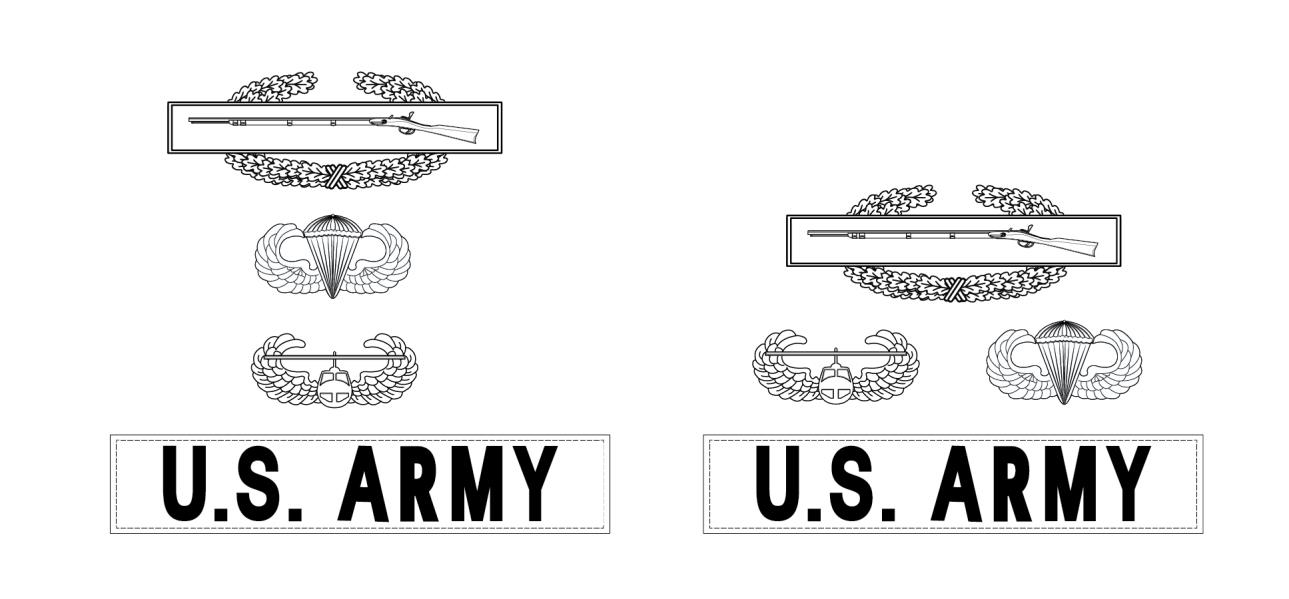
Figure 22-66: Wearing four subdued combat and special skill badges
DA PAM 670-1, Page 331
Figure 22-66 from DA PAM 670-1
View in PDF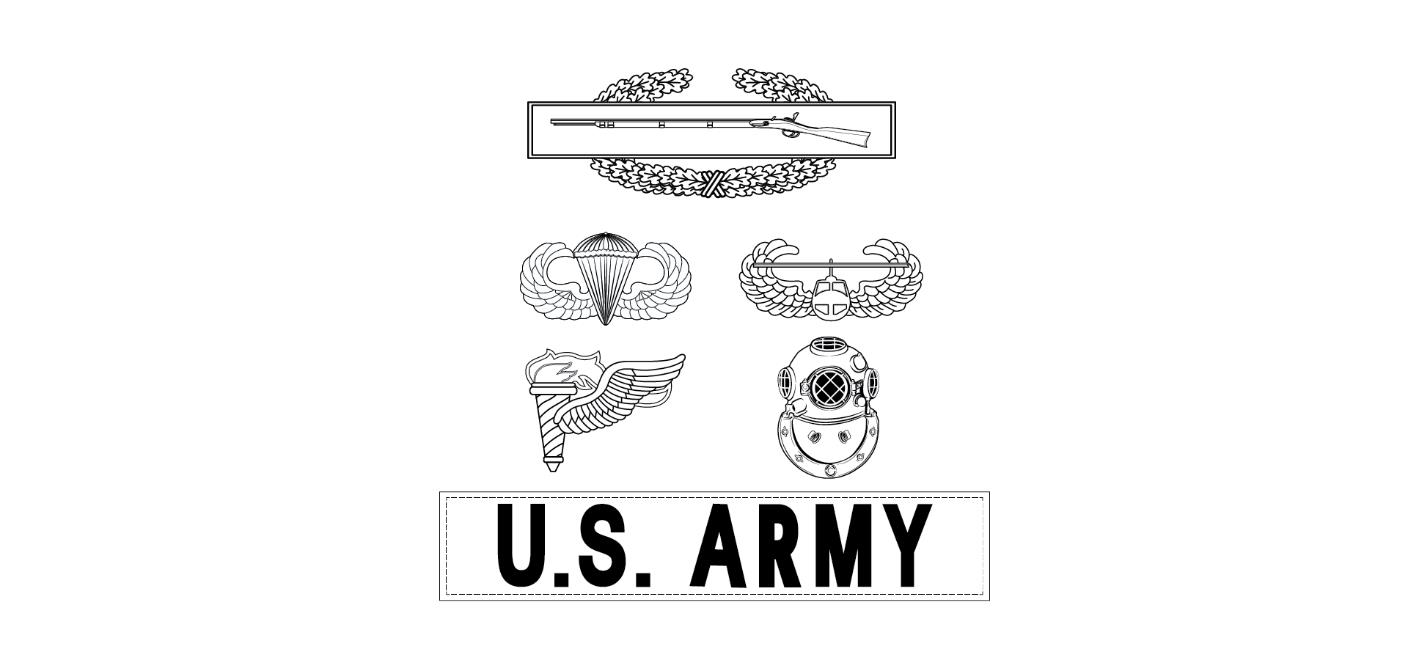
Figure 22-67: Wearing five subdued combat and special skill badges
DA PAM 670-1, Page 332
Figure 22-67 from DA PAM 670-1
View in PDF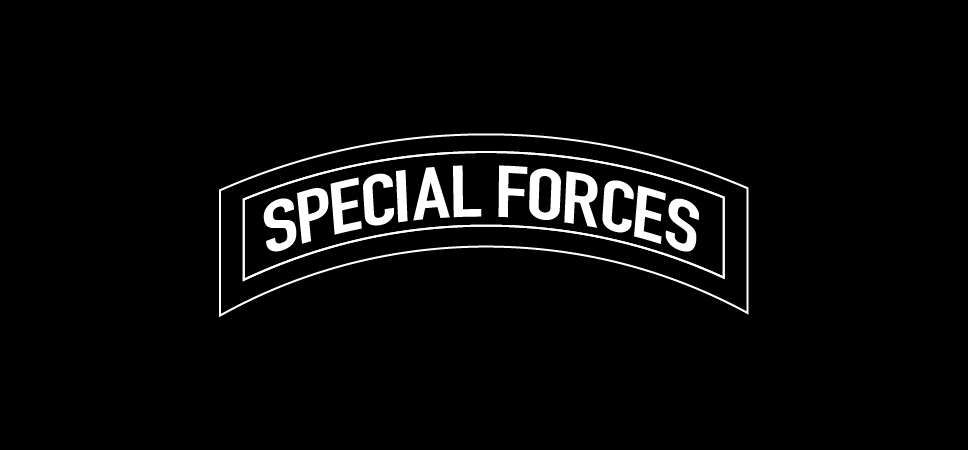
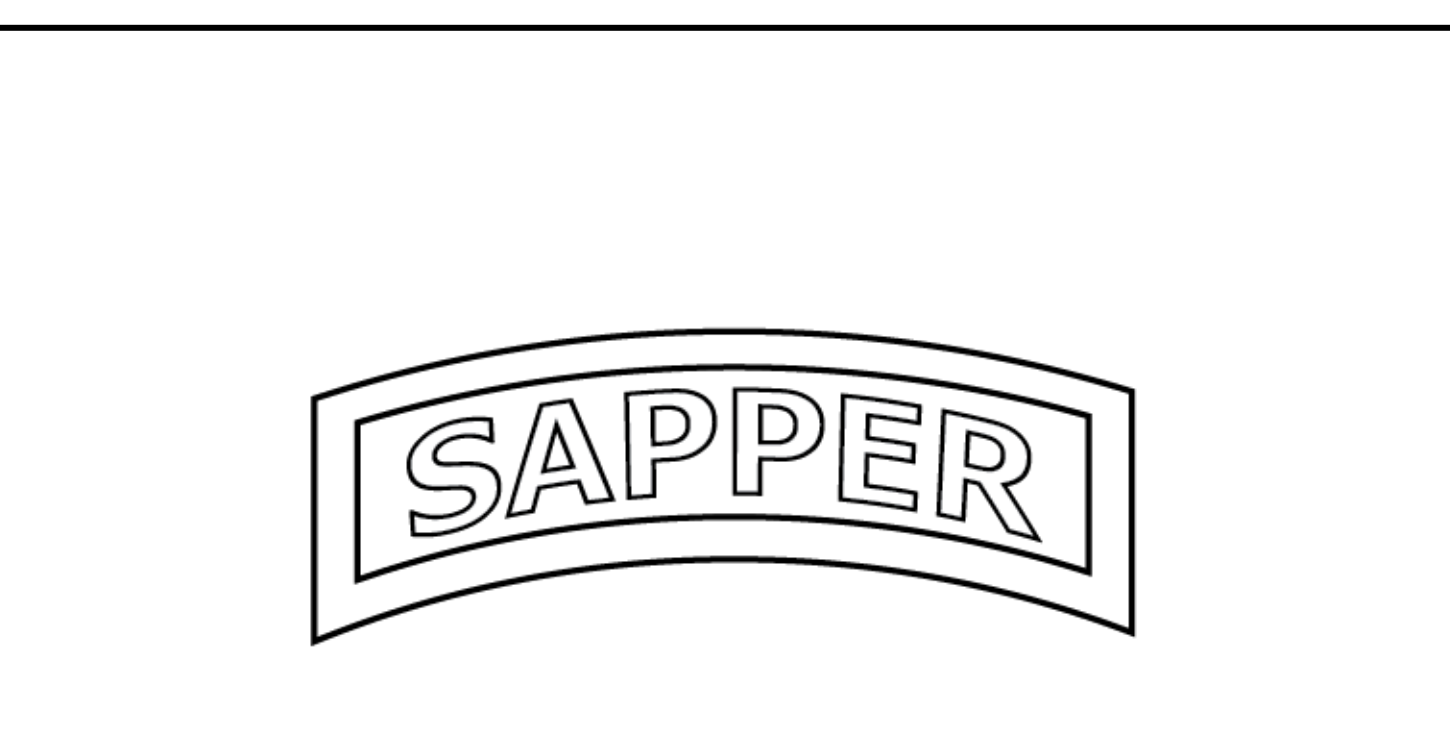
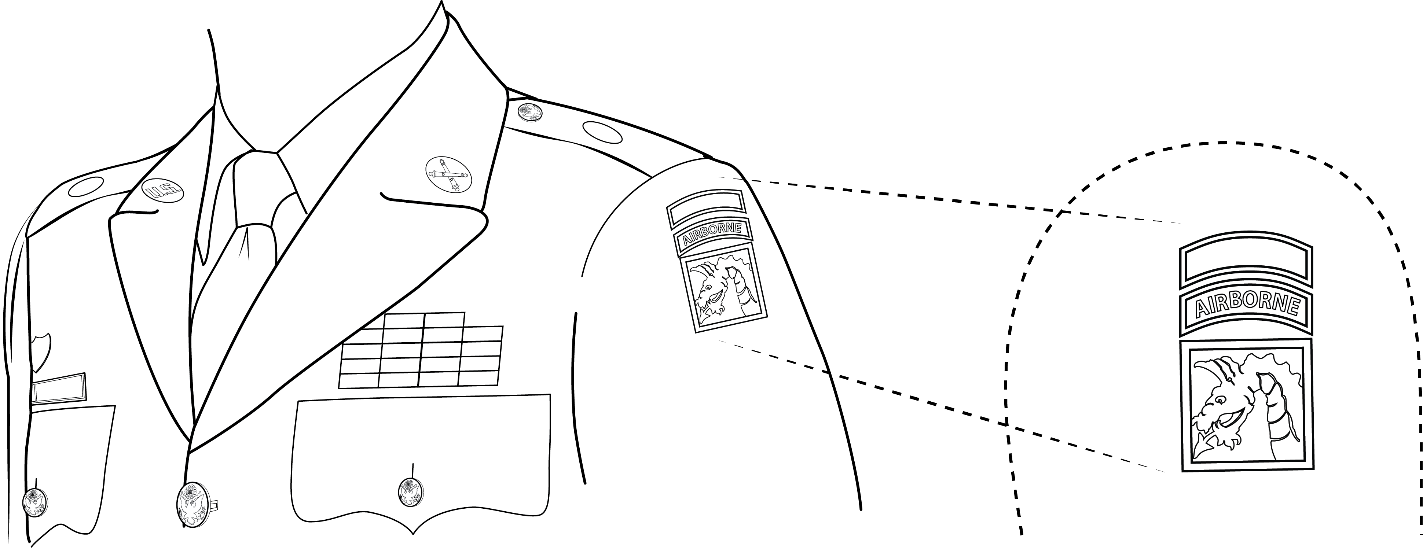
Figure 22-68: Wearing multiple special skill tabs on combat uniforms
DA PAM 670-1, Page 333
Figure 22-68 from DA PAM 670-1
View in PDF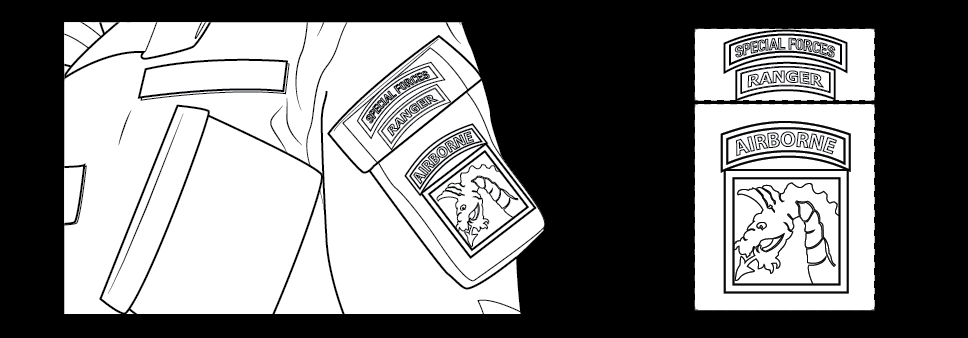
Figure 22-69: Wearing special skill tabs on the Army green service uniform
DA PAM 670-1, Page 333
Figure 22-69 from DA PAM 670-1
View in PDF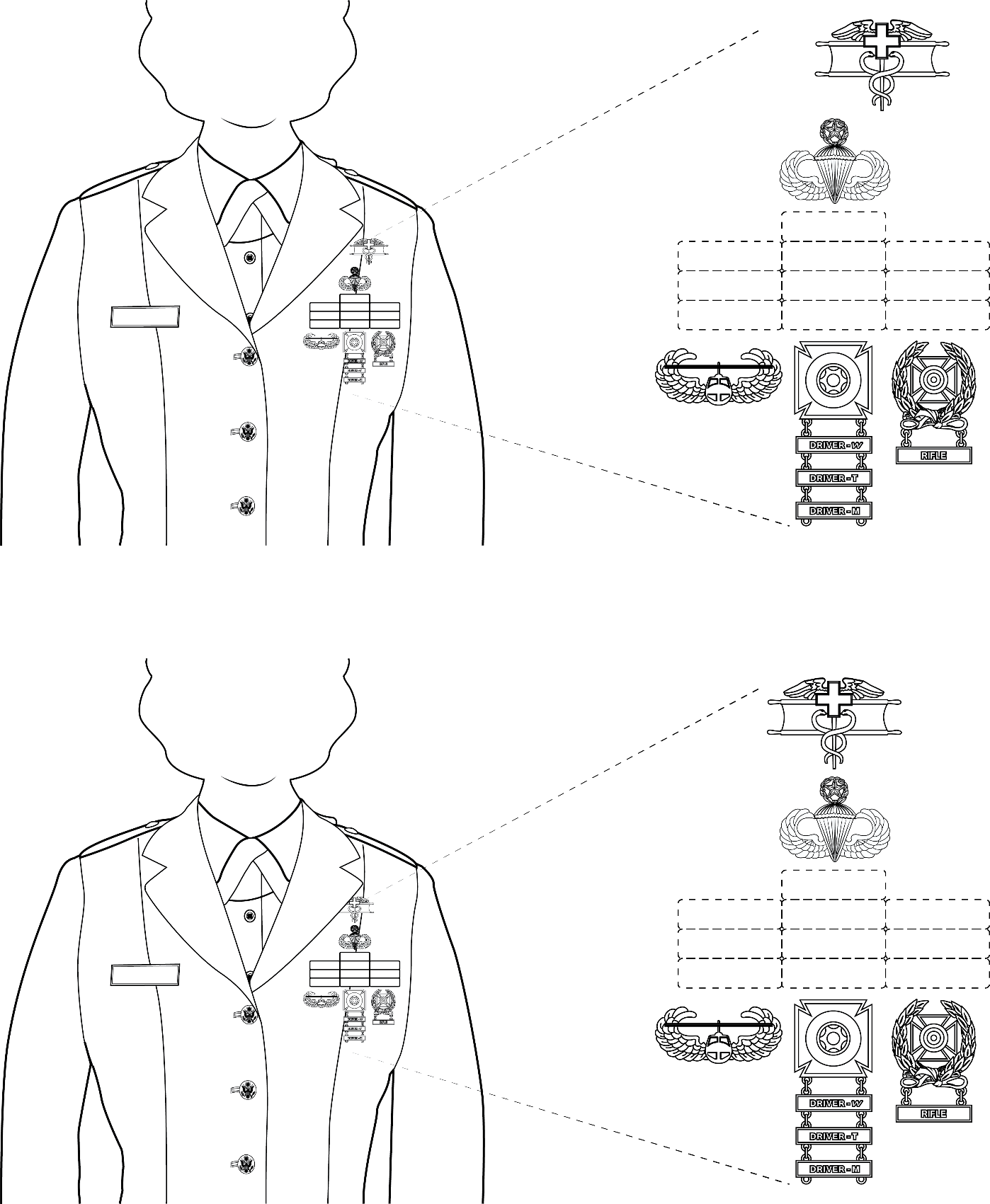
Figure 22-60: Wearing five badges on the Army service uniform, female, variations
DA PAM 670-1, Page 327
Figure 22-60 from DA PAM 670-1
View in PDF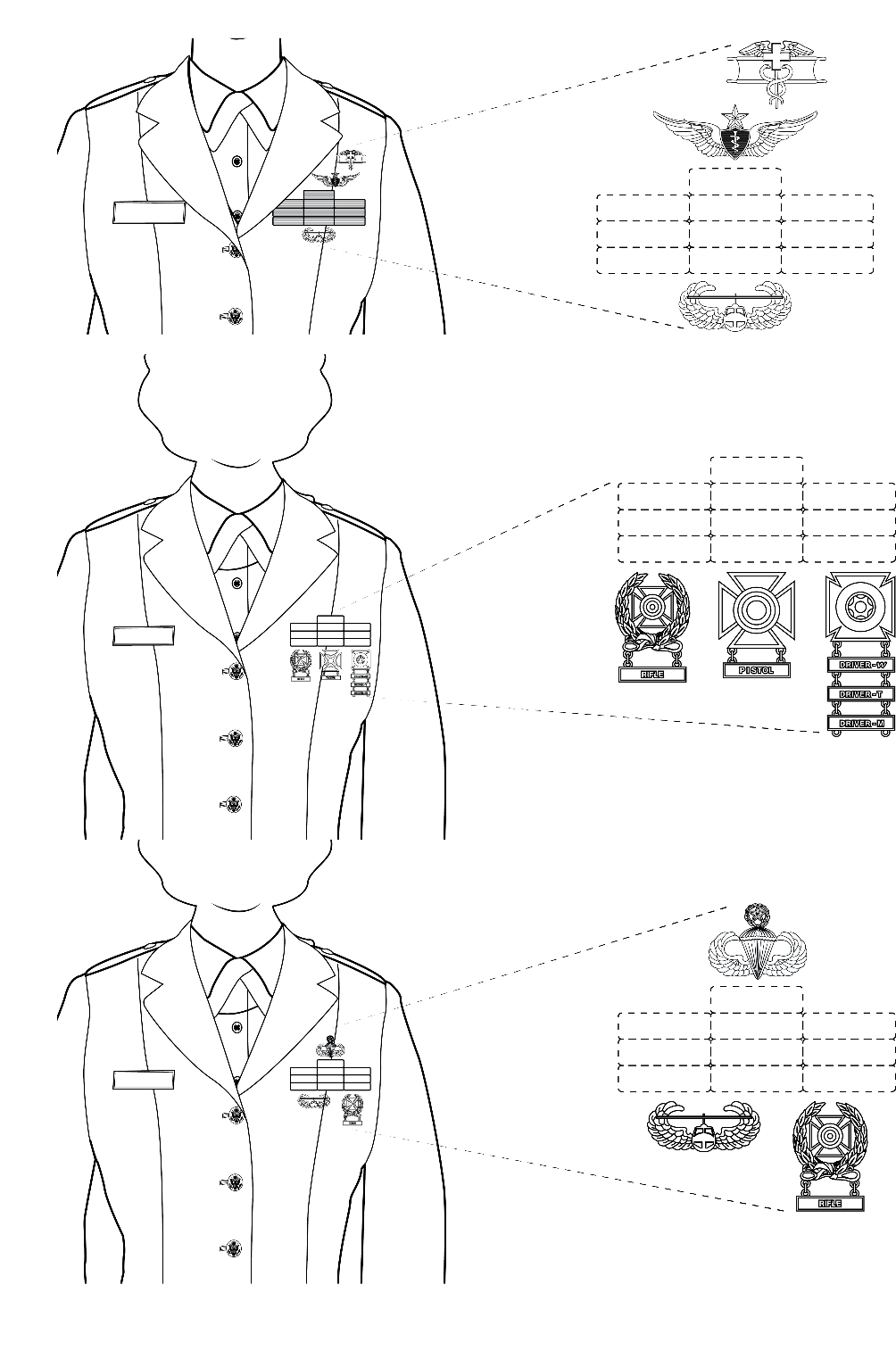
Figure 22-31: Wearing three badges on the Army service uniform, female, variations
DA PAM 670-1, Page 308
Figure 22-31 from DA PAM 670-1
View in PDF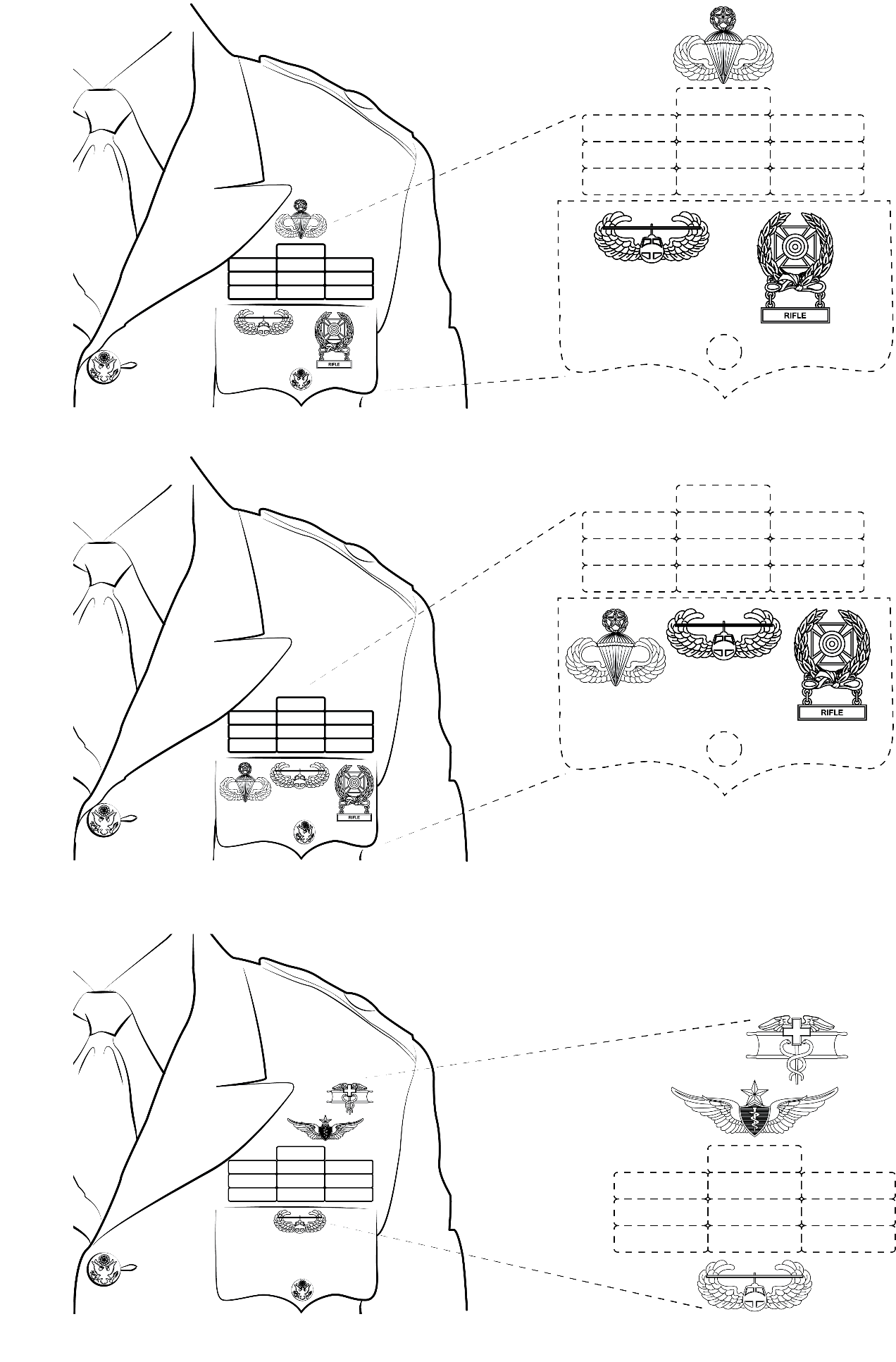
Figure 22-32: Wearing three badges on the Army green service uniform, variations
DA PAM 670-1, Page 309
Figure 22-32 from DA PAM 670-1
View in PDFRelated Guides
Get AR 670-1 Update Alerts
Be the first to know when Army Directives change uniform policies.
Disclaimer: This information is provided for educational purposes only. AR670.com is not an official U.S. Army resource. Always verify guidance with official publications and your chain of command.